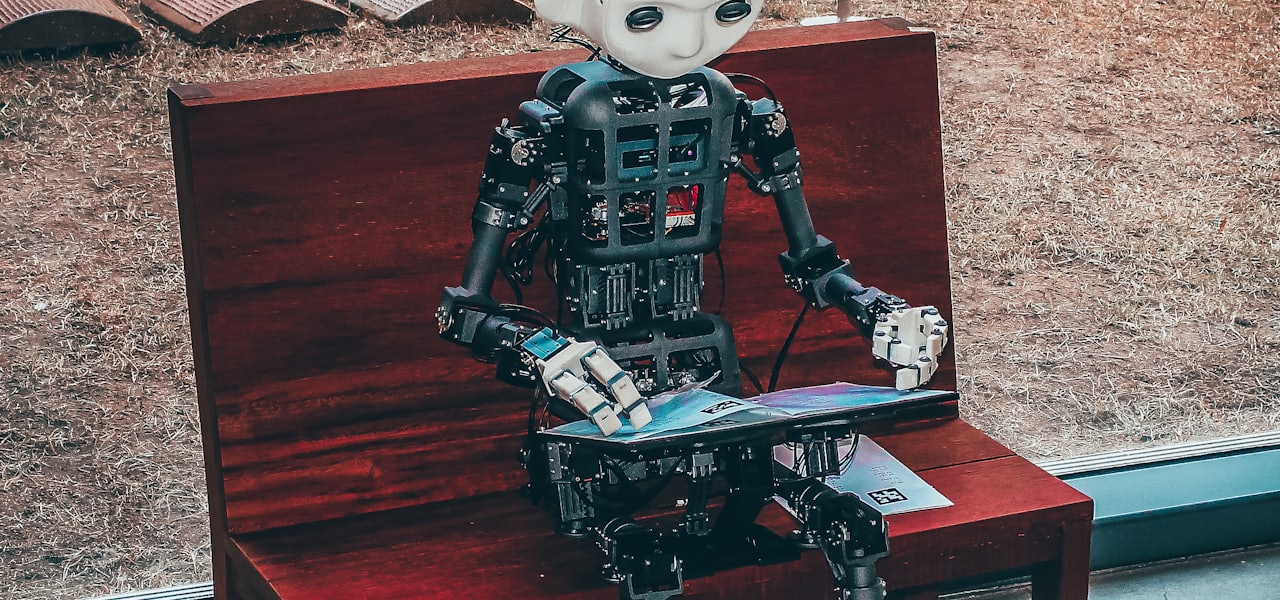
Machine translation in China is the history of machine translation systems developed in China. China became the fourth country that began machine translation (MT) research following USA, UK, and the Soviet Union. In 1957, the Language Institute of Chinese Academy of Sciences took the initiative in Russian-Chinese MT research program and set up an MT research group. From then on the research activities were directed and applied for academic purposes in Universities. The turning point of MT systems launching initiatives in market began from 1990s. MT systems went into blossom into the market. Among these systems, there were commercialized MT systems. To be more specific, Transtar was the first commercialized MT system and has been constantly upgraded. What's more, IMC/EC MT system which was developed by Computer Institute of Chinese Academy of Sciences has further made great advancement. Meanwhile, the practical MT system MT-IT-EC specific to communication domain was also striking to notice, for it has greatly improved the efficiency and productivity in the issue of publications. Government funding is a critical component and support in the development of market-oriented machine translation in China. It is evident to see that since Chinese opened up to the outside world and joined the WTO, the vigorous import and export trade generate opportunities for machine translation to transfer technical terms of products into the readable target information. Facing the increasing demand of sophisticated state-of -the -art translation technology, the academic area including research institute and universities are even launching bachelors’ and master's programs regarding machine translation. Thus, strong evidence illustrates the promising field of machine translation in the future market of China.
Alipay
Alipay (simplified Chinese: 支付宝; traditional Chinese: 支付寶; pinyin: zhīfùbǎo) is a third-party mobile and online payment platform, established in Hangzhou, China, in February 2004 by Alibaba Group and its founder Jack Ma. In 2015, Alipay moved its headquarters to Pudong, Shanghai, although its parent company Ant Financial remains Hangzhou-based. Alipay overtook PayPal as the world's largest mobile (digital) payment platform in 2013. As of June 2020, Alipay serves over 1.3 billion users and 80 million merchants. According to the statistics of the fourth quarter of 2018, Alipay has a 55.32% share of the third-party payment market in mainland China, and it continues to grow. Along with WeChat, Alipay has been described to be China's super-app with a wide range of functionalities including ridesharing, travel booking and medical appointments. == History == The service was first launched in 2003, by Taobao. The People's Bank of China, China's central bank, issued licensing regulations in June 2010 for third-party payment providers. It also issued separate guidelines for foreign-funded payment institutions. Because of this, Alipay, which accounted for half of China's non-bank online payment market, was restructured as a domestic company controlled by Alibaba CEO Jack Ma in order to facilitate the regulatory approval for the license. The 2010 transfer of Alipay's ownership was controversial, with media reports in 2011 that Yahoo! and Softbank (Alibaba Group's controlling shareholders) were not informed of the sale for nominal value. Chinese business publication Century Weekly criticised Ma, who stated that Alibaba Group's board of directors was aware of the transaction. The incident was criticised in foreign and Chinese media as harming foreign trust in making Chinese investments. The ownership dispute was resolved by Alibaba Group, Yahoo!, and Softbank in July 2011. In 2013, Alipay launched a financial product platform called Yu'e Bao. Alipay partnered with Tianhong Asset Management to launch the it. Yu'e Bao offers an online money market account in which Alipay customers can deposit money and receive a higher interest rate than that available from banks. It soon became China's largest online money market fund and prompted competitors like Baidu and Tencent to introduce alternatives. Alibaba (the parent company of Alipay) reported having 152 million Yu'e Bao users in mid-2016, with 810 billion RMB (US$117 billion) in funds under management. In 2015, Alipay's parent company was re-branded as Ant Financial Services Group. In 2017, Alipay unveiled their facial recognition payment service. In 2020, Alipay upgraded from a payment financial instrument to an open platform for digital life. In 2021, the mandate by the Ministry of Industry and Information Technology (MIIT) to open up the "walled garden" ecosystems of the major tech companies has led to the introduction of interoperability of payment QR codes of Alipay and competing WeChat Pay and UnionPay's Cloud QuickPass platforms. In response to the increase in Alipay's payment volume due to use on Alibaba's e-commerce sites and others, Chinese regulators introduced new rules in 2020. The new rules focused on Alipay because the payment volume exploded due to its use on Alibaba's e-commerce sites and other platforms. By the second quarter in 2020, Alipay held 55.6% of China's third party mobile payment market. The People's Bank of China made rules that required payment firms to place money with regulators and anti-monopoly reviews would be triggered if the amount exceeded 50% market share. The rules included that the People's Bank of China mandate an online-payment clearing route through the NetsUnion Clearing Corporation, a centralized, state-overseen clearing body, and that unused consumer funds be held by a third-party payment provider in a non-interest-bearing account. These measures increased transparency and reduced systemic risk. When Alipay operates outside of China, it must comply with local financial regulations, which may treat specific functions such as money-market funds or investment-linked products. In Singapore, such services may require prior authorization from securities or financial-services regulators before they can be offered to residents. == Services == Alipay states that it operates with more than 65 financial institutions including Visa and MasterCard to provide payment services for Taobao and Tmall as well as more than 460,000 online and local Chinese businesses. Alipay is used in smartphones with their Alipay Wallet app. QR code payment codes are used for local in-store payments. The Alipay app also provides features such as credit card bill payments, bank account managements, P2P transfer, prepay mobile phone top-up, bus and train ticket purchases, food orders, vehicles for hire, insurance selections and a digital identification document storage. Alipay also allows online check-out on most Chinese-based websites such as Taobao and Tmall. The Alipay app allows users to add their own services provided from different companies to create a more personalised experience. Since late 2008, Alipay has promoted public service payment services and has covered more than 300 cities nationwide, supporting more than 1,200 partner organizations. In addition to utility bills such as water and electricity, Alipay also extends their services to areas such as paying transportation fines, property fees, and cable television fees. Common online payment services also include hydropower coal payment, tuition payment and traffic fine. On 15 January 2009, Alipay launched a credit card repayment service, supporting 39 domestic bank-issued credit cards. It is currently the most popular third-party repayment platform. The main advantages are free credit card bills checking, repayments with no administrative fee, as well as automatic repayment, repayment reminders and other value-added services. In the first quarter of 2014, 76% of credit cards were also paid by Alipay Wallet. From December 2013, several chain convenience store companies, including Meiyijia, Hongqi Chain, and Qishiduo C-STORE and 7-Eleven, have successively supported Alipay payment; in December, Beijing taxi drivers began to accept Alipay to pay the fare. Subsequently, Wanda Cinema, Joy City, Wangfujing and other large-scale retail companies as well as movie theaters, KTV, and catering companies have access to Alipay. From 26 March 2019, the service fee will be charged for the payment of credit card through Alipay. Customers only pay the portion of the payment that exceeds 2,000 yuan at 0.1%. In addition to this, in 2019, Walgreens accepted Alipay as payment in 3,000 US stores. Walgreen's products are available to Chinese customers through Alibaba's Tmall online marketplace. The payment application can also be used on Alibaba.com's site and Taobao as a means of payment. A Nielsen report suggests that over 90% of Chinese tourists would be willing to use mobile payment overseas if given the option. Many Chinese tourists do not have international credit cards, and so Alipay is a payment option. Digital payments have become the norm in China as the government pushes a cashless system even in rural and village areas. In November 2019, Alipay introduced Tourpass, a service component that allows non-Chinese users to use its mobile payment feature by pre-loading Chinese Yuan equivalent foreign currency into the app. In 2020, Alipay used a QR code system to help in containing the COVID-19 outbreak. The health code system tags users one of three colors according to their location, basic health information and travel history. "Beauty filters" were included to Alipay's face-scan payment system in a new upgrade that was released in July 2019. The market has responded well to the "beauty filters," which make users seem better when they use the program to make payments. Alipay Tap is a payment function launched by Alipay in July 2024. Alipay+ NFC enables wallets to offer tap-to-pay acceptance across Mastercard's global contactless network, all within your existing wallet infrastructure. == Foreign expansion == Outside of China, more than 300 worldwide merchants use Alipay to sell directly to consumers in China. It currently supports transactions in 18 foreign currencies. Since the launch of Alipay in the Mainland China, Ant Financial introduced a series of expansion of the services to other countries. Other than expanding into individual countries, the system would also be integrated with online payment platform providers. Ant Group had acquired a majority stake into 2C2P, a Singapore-based provider used by merchants worldwide in April 2022, and would eventually integrate Alipay with 2C2P. === Asia === ==== Bangladesh ==== In 2018, Alipay bought 20% shares in Bangladeshi mobile financial service provider bKash Limited. ==== Hong Kong ==== In 2017, Ant Financial expanded to Hong Kong. In a joint venture with CK Hutchison, as Alipay Payment Ser
Transduction (machine learning)
In logic, statistical inference, and supervised learning, transduction or transductive inference is reasoning from observed, specific (training) cases to specific (test) cases. In contrast, induction is reasoning from observed training cases to general rules, which are then applied to the test cases. The distinction is most interesting in cases where the predictions of the transductive model are not achievable by any inductive model. Note that this is caused by transductive inference on different test sets producing mutually inconsistent predictions. Transduction was introduced in a computer science context by Vladimir Vapnik in the 1990s, motivated by his view that transduction is preferable to induction since, according to him, induction requires solving a more general problem (inferring a function) before solving a more specific problem (computing outputs for new cases): "When solving a problem of interest, do not solve a more general problem as an intermediate step. Try to get the answer that you really need but not a more general one.". An example of learning which is not inductive would be in the case of binary classification, where the inputs tend to cluster in two groups. A large set of test inputs may help in finding the clusters, thus providing useful information about the classification labels. The same predictions would not be obtainable from a model which induces a function based only on the training cases. Some people may call this an example of the closely related semi-supervised learning, since Vapnik's motivation is quite different. The most well-known example of a case-bases learning algorithm is the k-nearest neighbor algorithm, which is related to transductive learning algorithms. Another example of an algorithm in this category is the Transductive Support Vector Machine (TSVM). A third possible motivation of transduction arises through the need to approximate. If exact inference is computationally prohibitive, one may at least try to make sure that the approximations are good at the test inputs. In this case, the test inputs could come from an arbitrary distribution (not necessarily related to the distribution of the training inputs), which wouldn't be allowed in semi-supervised learning. An example of an algorithm falling in this category is the Bayesian Committee Machine (BCM). == Historical context == The mode of inference from particulars to particulars, which Vapnik came to call transduction, was already distinguished from the mode of inference from particulars to generalizations in part III of the Cambridge philosopher and logician W.E. Johnson's 1924 textbook, Logic. In Johnson's work, the former mode was called 'eduction' and the latter was called 'induction'. Bruno de Finetti developed a purely subjective form of Bayesianism in which claims about objective chances could be translated into empirically respectable claims about subjective credences with respect to observables through exchangeability properties. An early statement of this view can be found in his 1937 La Prévision: ses Lois Logiques, ses Sources Subjectives and a mature statement in his 1970 Theory of Probability. Within de Finetti's subjective Bayesian framework, all inductive inference is ultimately inference from particulars to particulars. == Example problem == The following example problem contrasts some of the unique properties of transduction against induction. A collection of points is given, such that some of the points are labeled (A, B, or C), but most of the points are unlabeled (?). The goal is to predict appropriate labels for all of the unlabeled points. The inductive approach to solving this problem is to use the labeled points to train a supervised learning algorithm, and then have it predict labels for all of the unlabeled points. With this problem, however, the supervised learning algorithm will only have five labeled points to use as a basis for building a predictive model. It will certainly struggle to build a model that captures the structure of this data. For example, if a nearest-neighbor algorithm is used, then the points near the middle will be labeled "A" or "C", even though it is apparent that they belong to the same cluster as the point labeled "B", compared to semi-supervised learning. Transduction has the advantage of being able to consider all of the points, not just the labeled points, while performing the labeling task. In this case, transductive algorithms would label the unlabeled points according to the clusters to which they naturally belong. The points in the middle, therefore, would most likely be labeled "B", because they are packed very close to that cluster. An advantage of transduction is that it may be able to make better predictions with fewer labeled points, because it uses the natural breaks found in the unlabeled points. One disadvantage of transduction is that it builds no predictive model. If a previously unknown point is added to the set, the entire transductive algorithm would need to be repeated with all of the points in order to predict a label. This can be computationally expensive if the data is made available incrementally in a stream. Further, this might cause the predictions of some of the old points to change (which may be good or bad, depending on the application). A supervised learning algorithm, on the other hand, can label new points instantly, with very little computational cost. == Transduction algorithms == Transduction algorithms can be broadly divided into two categories: those that seek to assign discrete labels to unlabeled points, and those that seek to regress continuous labels for unlabeled points. Algorithms that seek to predict discrete labels tend to be derived by adding partial supervision to a clustering algorithm. Two classes of algorithms can be used: flat clustering and hierarchical clustering. The latter can be further subdivided into two categories: those that cluster by partitioning, and those that cluster by agglomerating. Algorithms that seek to predict continuous labels tend to be derived by adding partial supervision to a manifold learning algorithm. === Partitioning transduction === Partitioning transduction can be thought of as top-down transduction. It is a semi-supervised extension of partition-based clustering. It is typically performed as follows: Consider the set of all points to be one large partition. While any partition P contains two points with conflicting labels: Partition P into smaller partitions. For each partition P: Assign the same label to all of the points in P. Of course, any reasonable partitioning technique could be used with this algorithm. Max flow min cut partitioning schemes are very popular for this purpose. === Agglomerative transduction === Agglomerative transduction can be thought of as bottom-up transduction. It is a semi-supervised extension of agglomerative clustering. It is typically performed as follows: Compute the pair-wise distances, D, between all the points. Sort D in ascending order. Consider each point to be a cluster of size 1. For each pair of points {a,b} in D: If (a is unlabeled) or (b is unlabeled) or (a and b have the same label) Merge the two clusters that contain a and b. Label all points in the merged cluster with the same label. === Continuous Label Transduction === These methods seek to regress continuous labels, often via manifold learning techniques. The idea is to learn a low-dimensional representation of the data and infer values smoothly across the manifold. == Applications and related concepts == Transduction is closely related to: Semi-supervised learning – uses both labeled and unlabeled data but typically induces a model. Case-based reasoning – such as the k-nearest neighbor (k-NN) algorithm, often considered a transductive method. Transductive Support Vector Machines (TSVM) – extend standard SVMs to incorporate unlabeled test data during training. Bayesian Committee Machine (BCM) – an approximation method that makes transductive predictions when exact inference is too costly.
Neural radiance field
A neural radiance field (NeRF) is a neural field for reconstructing a three-dimensional representation of a scene from two-dimensional images. The NeRF model enables downstream applications of novel view synthesis, scene geometry reconstruction, and obtaining the reflectance properties of the scene. Additional scene properties such as camera poses may also be jointly learned. First introduced in 2020, it has since gained significant attention for its potential applications in computer graphics and content creation. == Algorithm == The NeRF algorithm represents a scene as a radiance field parametrized by a deep neural network (DNN). The network predicts a volume density and view-dependent emitted radiance given the spatial location ( x , y , z ) {\displaystyle (x,y,z)} and viewing direction in Euler angles ( θ , Φ ) {\displaystyle (\theta ,\Phi )} of the camera. By sampling many points along camera rays, traditional volume rendering techniques can produce an image. === Data collection === A NeRF needs to be retrained for each unique scene. The first step is to collect images of the scene from different angles and their respective camera pose. These images are standard 2D images and do not require a specialized camera or software. Any camera is able to generate datasets, provided the settings and capture method meet the requirements for SfM (Structure from Motion). This requires tracking of the camera position and orientation, often through some combination of SLAM, GPS, or inertial estimation. Researchers often use synthetic data to evaluate NeRF and related techniques. For such data, images (rendered through traditional non-learned methods) and respective camera poses are reproducible and error-free. === Training === For each sparse viewpoint (image and camera pose) provided, camera rays are marched through the scene, generating a set of 3D points with a given radiance direction (into the camera). For these points, volume density and emitted radiance are predicted using the multi-layer perceptron (MLP). An image is then generated through classical volume rendering. Because this process is fully differentiable, the error between the predicted image and the original image can be minimized with gradient descent over multiple viewpoints, encouraging the MLP to develop a coherent model of the scene. == Variations and improvements == Early versions of NeRF were slow to optimize and required that all input views were taken with the same camera in the same lighting conditions. These performed best when limited to orbiting around individual objects, such as a drum set, plants or small toys. Since the original paper in 2020, many improvements have been made to the NeRF algorithm, with variations for special use cases. === Fourier feature mapping === In 2020, shortly after the release of NeRF, the addition of Fourier Feature Mapping improved training speed and image accuracy. Deep neural networks struggle to learn high frequency functions in low dimensional domains; a phenomenon known as spectral bias. To overcome this shortcoming, points are mapped to a higher dimensional feature space before being fed into the MLP. γ ( v ) = [ a 1 cos ( 2 π B 1 T v ) a 1 sin ( 2 π B 1 T v ) ⋮ a m cos ( 2 π B m T v ) a m sin ( 2 π B m T v ) ] {\displaystyle \gamma (\mathrm {v} )={\begin{bmatrix}a_{1}\cos(2{\pi }{\mathrm {B} }_{1}^{T}\mathrm {v} )\\a_{1}\sin(2\pi {\mathrm {B} }_{1}^{T}\mathrm {v} )\\\vdots \\a_{m}\cos(2{\pi }{\mathrm {B} }_{m}^{T}\mathrm {v} )\\a_{m}\sin(2{\pi }{\mathrm {B} }_{m}^{T}\mathrm {v} )\end{bmatrix}}} Where v {\displaystyle \mathrm {v} } is the input point, B i {\displaystyle \mathrm {B} _{i}} are the frequency vectors, and a i {\displaystyle a_{i}} are coefficients. This allows for rapid convergence to high frequency functions, such as pixels in a detailed image. === Bundle-adjusting neural radiance fields === One limitation of NeRFs is the requirement of knowing accurate camera poses to train the model. Often times, pose estimation methods are not completely accurate, nor is the camera pose even possible to know. These imperfections result in artifacts and suboptimal convergence. So, a method was developed to optimize the camera pose along with the volumetric function itself. Called Bundle-Adjusting Neural Radiance Field (BARF), the technique uses a dynamic low-pass filter (DLPF) to go from coarse to fine adjustment, minimizing error by finding the geometric transformation to the desired image. This corrects imperfect camera poses and greatly improves the quality of NeRF renders. === Multiscale representation === Conventional NeRFs struggle to represent detail at all viewing distances, producing blurry images up close and overly aliased images from distant views. In 2021, researchers introduced a technique to improve the sharpness of details at different viewing scales known as mip-NeRF (comes from mipmap). Rather than sampling a single ray per pixel, the technique fits a gaussian to the conical frustum cast by the camera. This improvement effectively anti-aliases across all viewing scales. mip-NeRF also reduces overall image error and is faster to converge at about half the size of ray-based NeRF. === Learned initializations === In 2021, researchers applied meta-learning to assign initial weights to the MLP. This rapidly speeds up convergence by effectively giving the network a head start in gradient descent. Meta-learning also allowed the MLP to learn an underlying representation of certain scene types. For example, given a dataset of famous tourist landmarks, an initialized NeRF could partially reconstruct a scene given one image. === NeRF in the wild === Conventional NeRFs are vulnerable to slight variations in input images (objects, lighting) often resulting in ghosting and artifacts. As a result, NeRFs struggle to represent dynamic scenes, such as bustling city streets with changes in lighting and dynamic objects. In 2021, researchers at Google developed a new method for accounting for these variations, named NeRF in the Wild (NeRF-W). This method splits the neural network (MLP) into three separate models. The main MLP is retained to encode the static volumetric radiance. However, it operates in sequence with a separate MLP for appearance embedding (changes in lighting, camera properties) and an MLP for transient embedding (changes in scene objects). This allows the NeRF to be trained on diverse photo collections, such as those taken by mobile phones at different times of day. === Relighting === In 2021, researchers added more outputs to the MLP at the heart of NeRFs. The output now included: volume density, surface normal, material parameters, distance to the first surface intersection (in any direction), and visibility of the external environment in any direction. The inclusion of these new parameters lets the MLP learn material properties, rather than pure radiance values. This facilitates a more complex rendering pipeline, calculating direct and global illumination, specular highlights, and shadows. As a result, the NeRF can render the scene under any lighting conditions with no re-training. === Plenoctrees === Although NeRFs had reached high levels of fidelity, their costly compute time made them useless for many applications requiring real-time rendering, such as VR/AR and interactive content. Introduced in 2021, Plenoctrees (plenoptic octrees) enabled real-time rendering of pre-trained NeRFs through division of the volumetric radiance function into an octree. Rather than assigning a radiance direction into the camera, viewing direction is taken out of the network input and spherical radiance is predicted for each region. This makes rendering over 3000x faster than conventional NeRFs. === Sparse Neural Radiance Grid === Similar to Plenoctrees, this method enabled real-time rendering of pretrained NeRFs. To avoid querying the large MLP for each point, this method bakes NeRFs into Sparse Neural Radiance Grids (SNeRG). A SNeRG is a sparse voxel grid containing opacity and color, with learned feature vectors to encode view-dependent information. A lightweight, more efficient MLP is then used to produce view-dependent residuals to modify the color and opacity. To enable this compressive baking, small changes to the NeRF architecture were made, such as running the MLP once per pixel rather than for each point along the ray. These improvements make SNeRG extremely efficient, outperforming Plenoctrees. === Instant NeRFs === In 2022, researchers at Nvidia enabled real-time training of NeRFs through a technique known as Instant Neural Graphics Primitives. An innovative input encoding reduces computation, enabling real-time training of a NeRF, an improvement orders of magnitude above previous methods. The speedup stems from the use of spatial hash functions, which have O ( 1 ) {\displaystyle O(1)} access times, and parallelized architectures which run fast on modern GPUs. == Related techniques == === Plenoxels === Plen
AUTINDEX
AUTINDEX is a commercial text mining software package based on sophisticated linguistics. AUTINDEX, resulting from research in information extraction, is a product of the Institute of Applied Information Sciences (IAI) which is a non-profit institute that has been researching and developing language technology since its foundation in 1985. IAI is an institute affiliated to Saarland University in Saarbrücken, Germany. AUTINDEX is the result of a number of research projects funded by the EU (Project BINDEX), by Deutsche Forschungsgemeinschaft and the German Ministry for Economy. Amongst the latter there are the projects LinSearch, and WISSMER, see also the reference to IAI-Website. The basic functionality of AUTINDEX is the extraction of key words from a document to represent the semantics of the document. Ideally the system is integrated with a thesaurus that defines the standardised terms to be used for key word assignment. AUTINDEX is used in library applications (e.g. integrated in dandelon.com) as well as in high quality (expert) information systems, and in document management and content management environments. Together with AUTINDEX a number of additional software comes along such as an integration with Apache Solr / Lucene to provide a complete information retrieval environment, a classification and categorisation system on the basis of a machine learning software that assigns domains to the document, and a system for searching with semantically similar terms that are collected in so called tag clouds.
FuseBase
FuseBase (previously Nimbus Note and Nimbus Platform) is a B2B SaaS platform. It is among the first to support the Model Context Protocol (MCP), an open standard enabling seamless integration of AI agents with external tools, systems, and data sources. == History == The platform was founded in 2014 as Nimbus Note, the platform started as a cross-platform note-taking and information management tool. As it evolved into Nimbus Platform, it added project management and client portal capabilities. In 2023, the company rebranded as FuseBase, pivoting to connect and automate both internal and external collaboration through AI Agents and cutting-edge protocol adoption like MCP. At the same time, FuseBase was named Product of the Year on Product Hunt. == Technical overview == The platform integrates the Model Context Protocol (MCP), an open-source framework created by Anthropic. MCP allows AI models to securely access and interact with external data, tools, and systems. This enables FuseBase AI Agents to gather relevant context, perform actions, and provide more advanced automation.
LMArena
Arena (formerly LMArena and Chatbot Arena) is a public, web-based platform that evaluates large language models (LLMs). Users enter prompts for two anonymous models to respond to and vote on the model that gave the better response, after which the models' identities are revealed. Users can also choose models to test themselves via the "Direct" selection. Companies which have supplied the company with their large language models include OpenAI, Google DeepMind, and Anthropic. The website has been used for preview releases of upcoming models. Chinese company DeepSeek tested its prototype models in the Arena months before its R1 model gained attention in Western media. Other notable pre-release models include OpenAI's GPT-5 under the codename "summit" and Google DeepMind's Gemini 2.5 Flash Image (an image-generation and editing model) under the codename "Nano Banana". Research has identified specific limitations in Arena's methodology. == History == Chatbot Arena was released on April 24, 2023. In June 2024, Chatbot Arena added image support. In September 2024, Chatbot Arena moved to its own dedicated domain name, lmarena.ai (or LMArena). In April 2025, Meta released Llama 4. Llama 4 Maverick beat GPT-4o and Gemini 2.0 Flash on LMArena, but the version of Maverick on LMArena unfairly differed from the publicly available version. LMArena updated their policies in response. In April 2025, LMArena incorporated as an independent company. That May, LMArena raised $100 million in a seed funding round, valuing the company at $600 million. Participants in the seed funding round included Andreessen Horowitz, UC Investments, Lightspeed Venture Partners, Felicis Ventures, and Kleiner Perkins. On January 6, 2026, LMArena announced the closing of a $150 million Series A funding round, bringing the company’s post-money valuation to approximately $1.7 billion. The round was led by Felicis and UC Investments (University of California), with participation from Andreessen Horowitz, The House Fund, LDVP, Kleiner Perkins, Lightspeed Venture Partners, and Laude Ventures. In January 2026, LMArena added video support. On January 28, 2026, LMArena rebranded to "Arena".